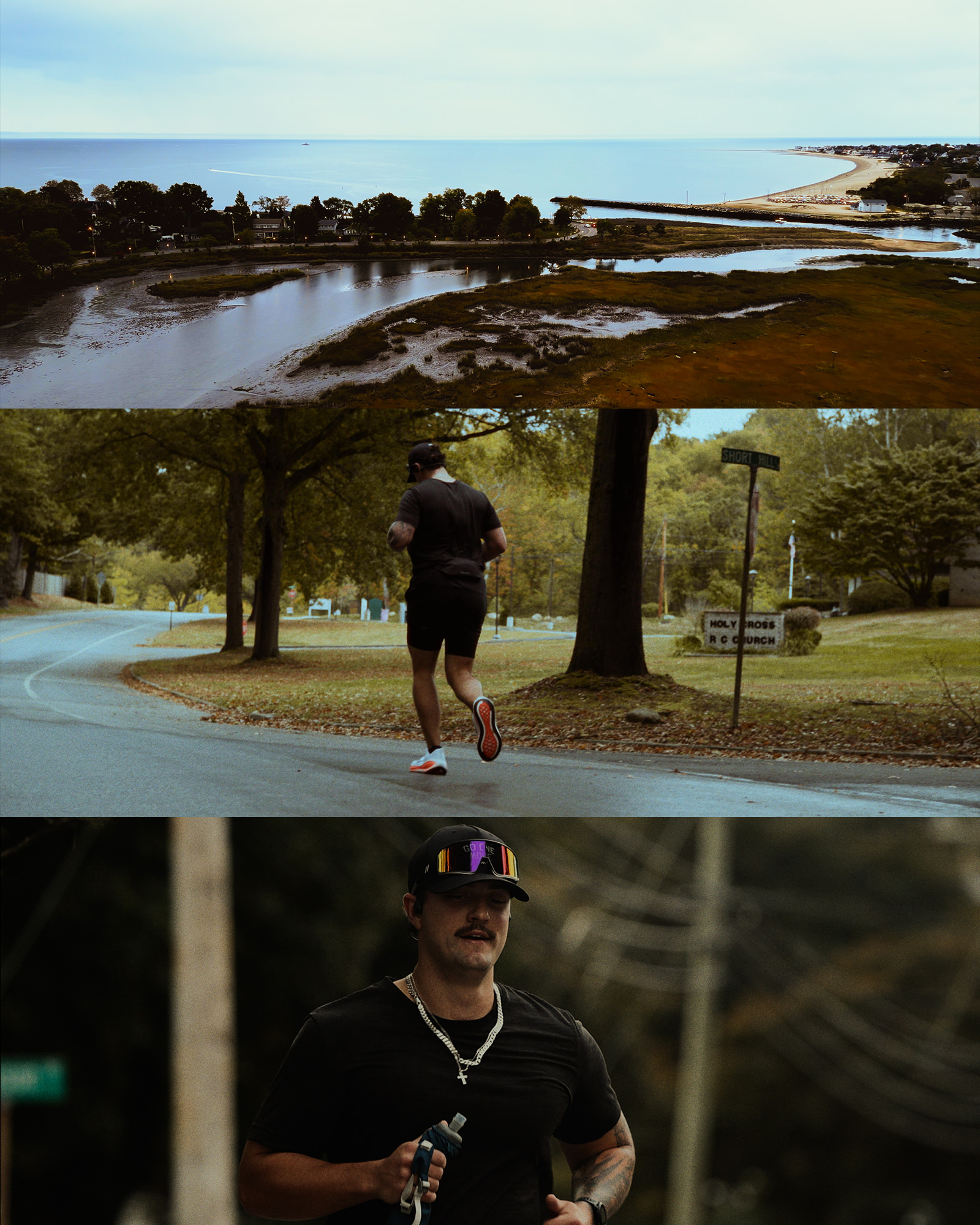
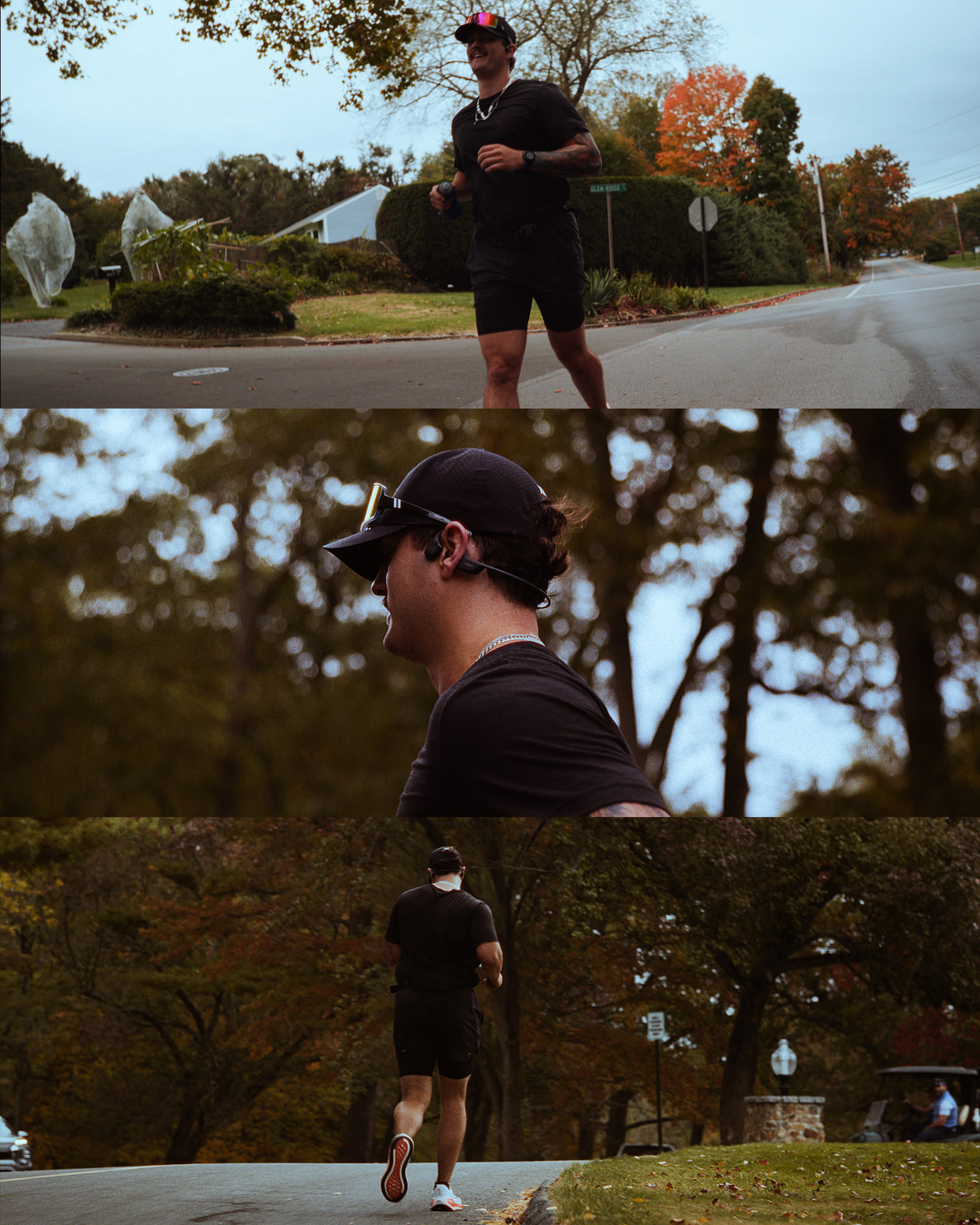
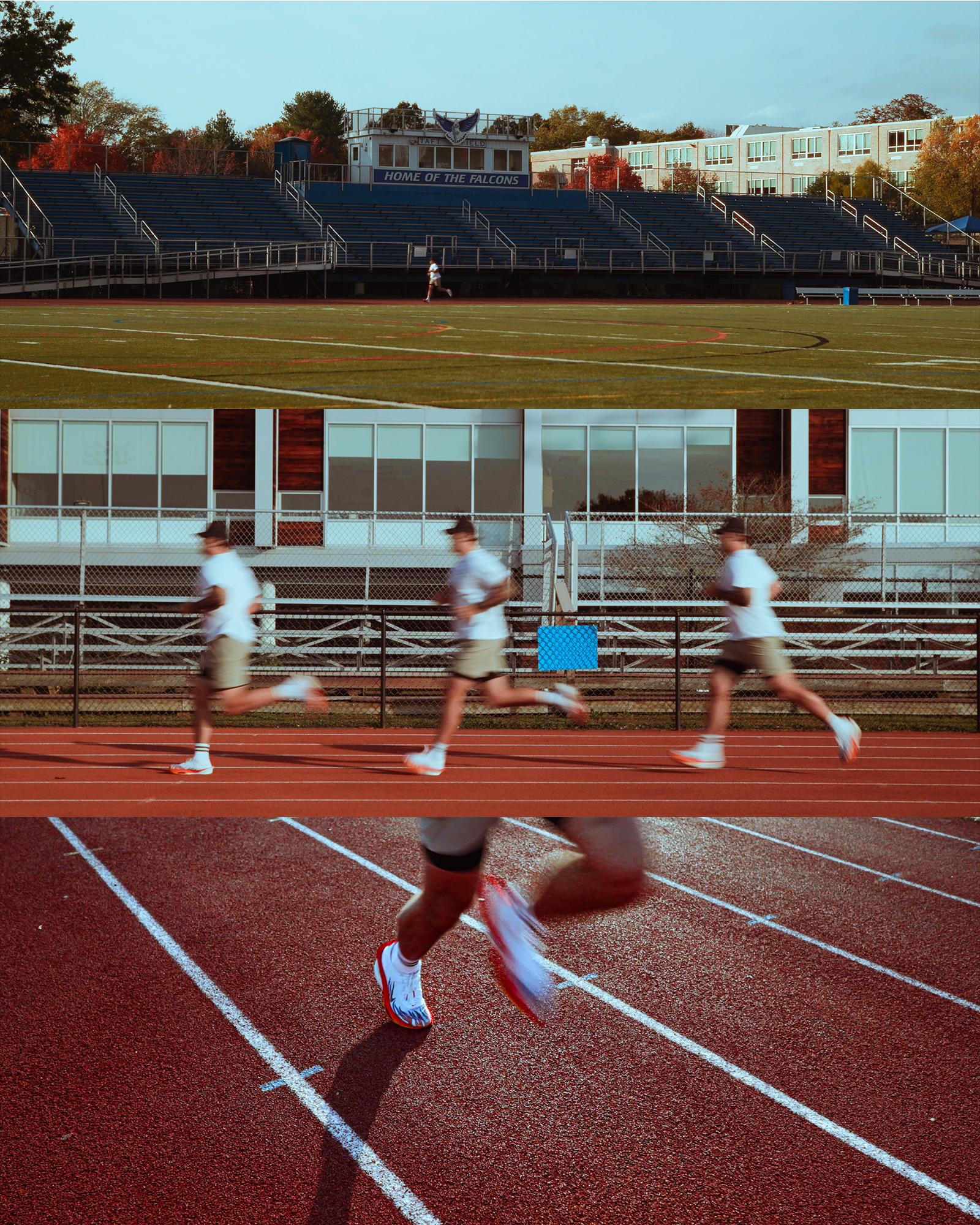
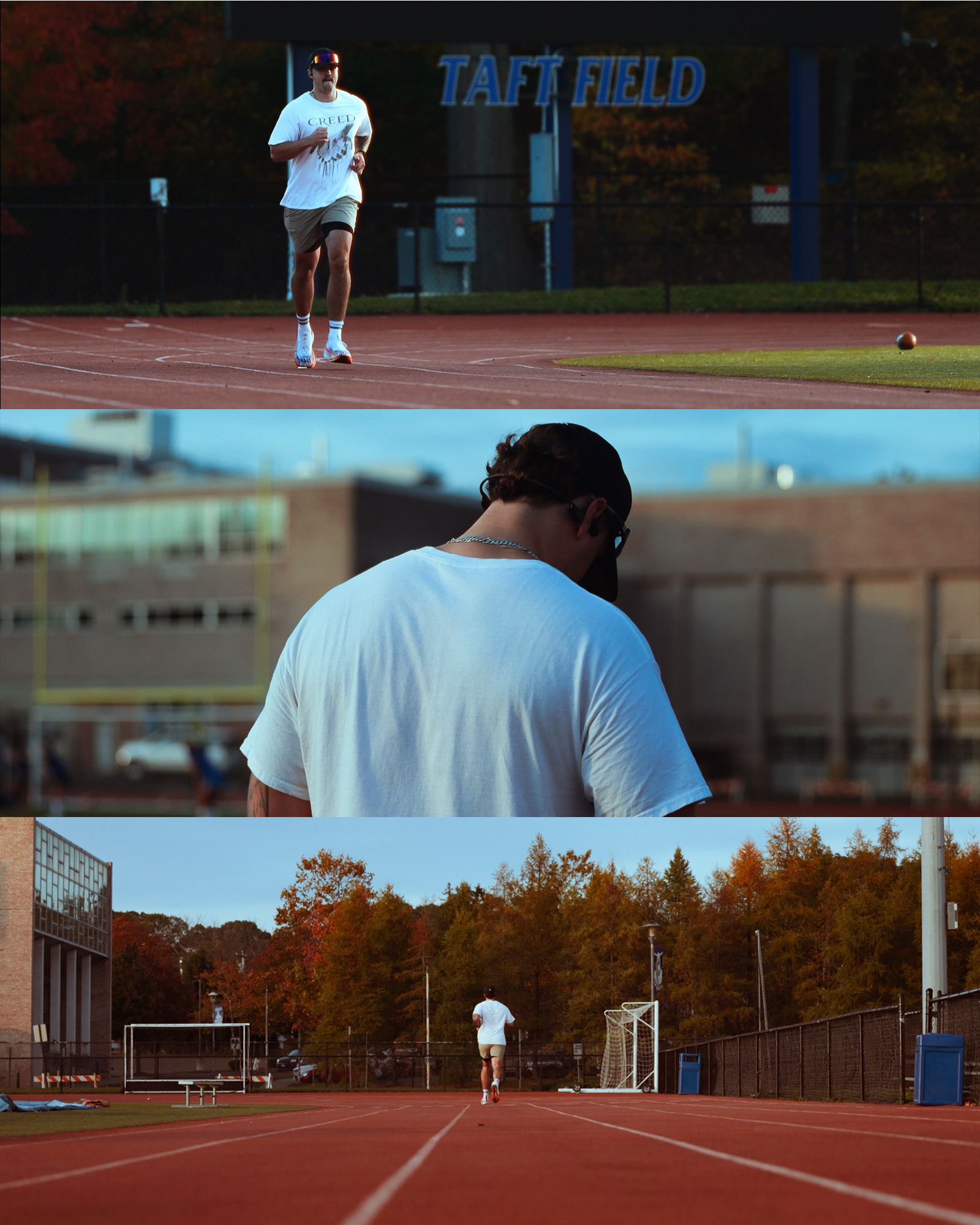
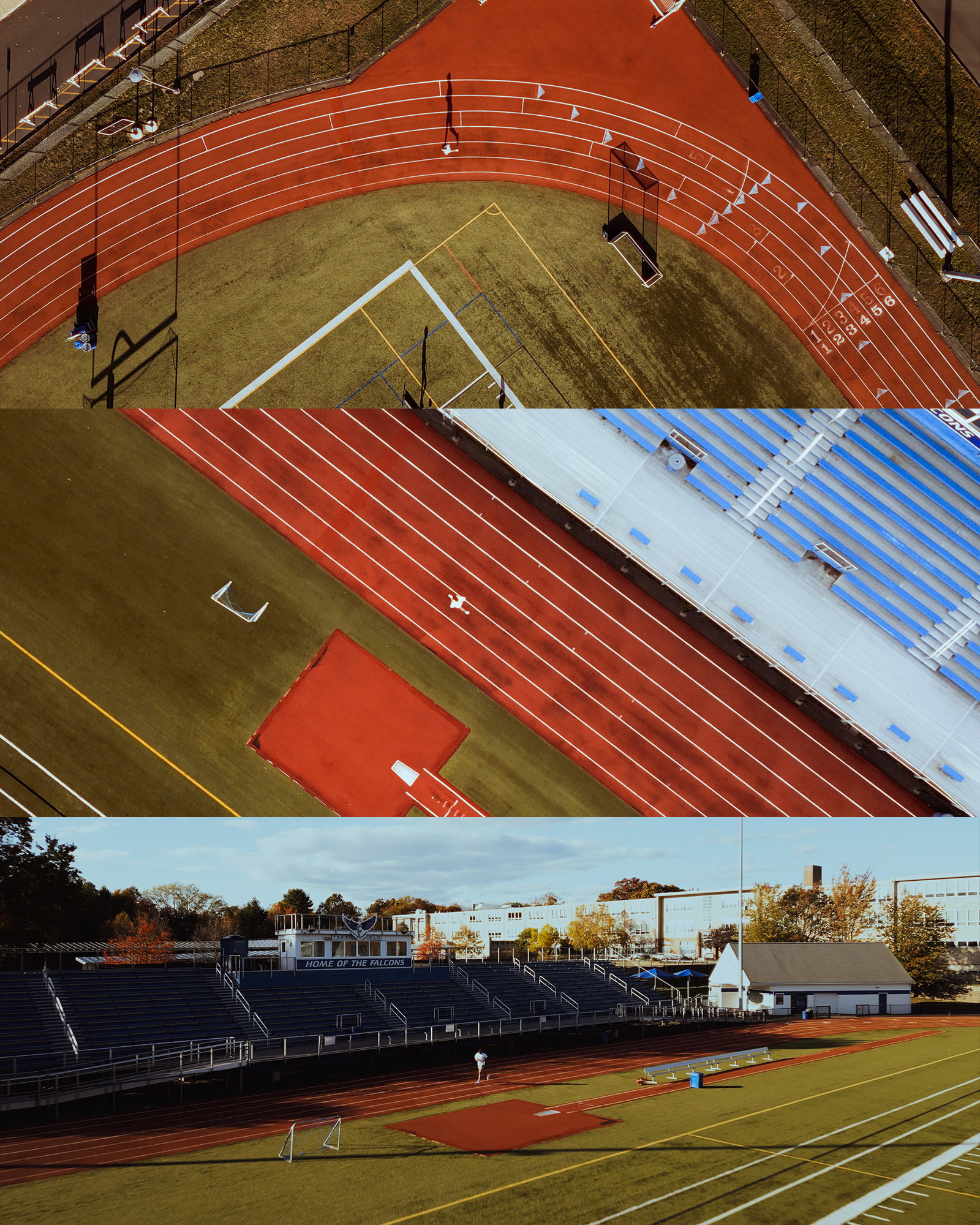
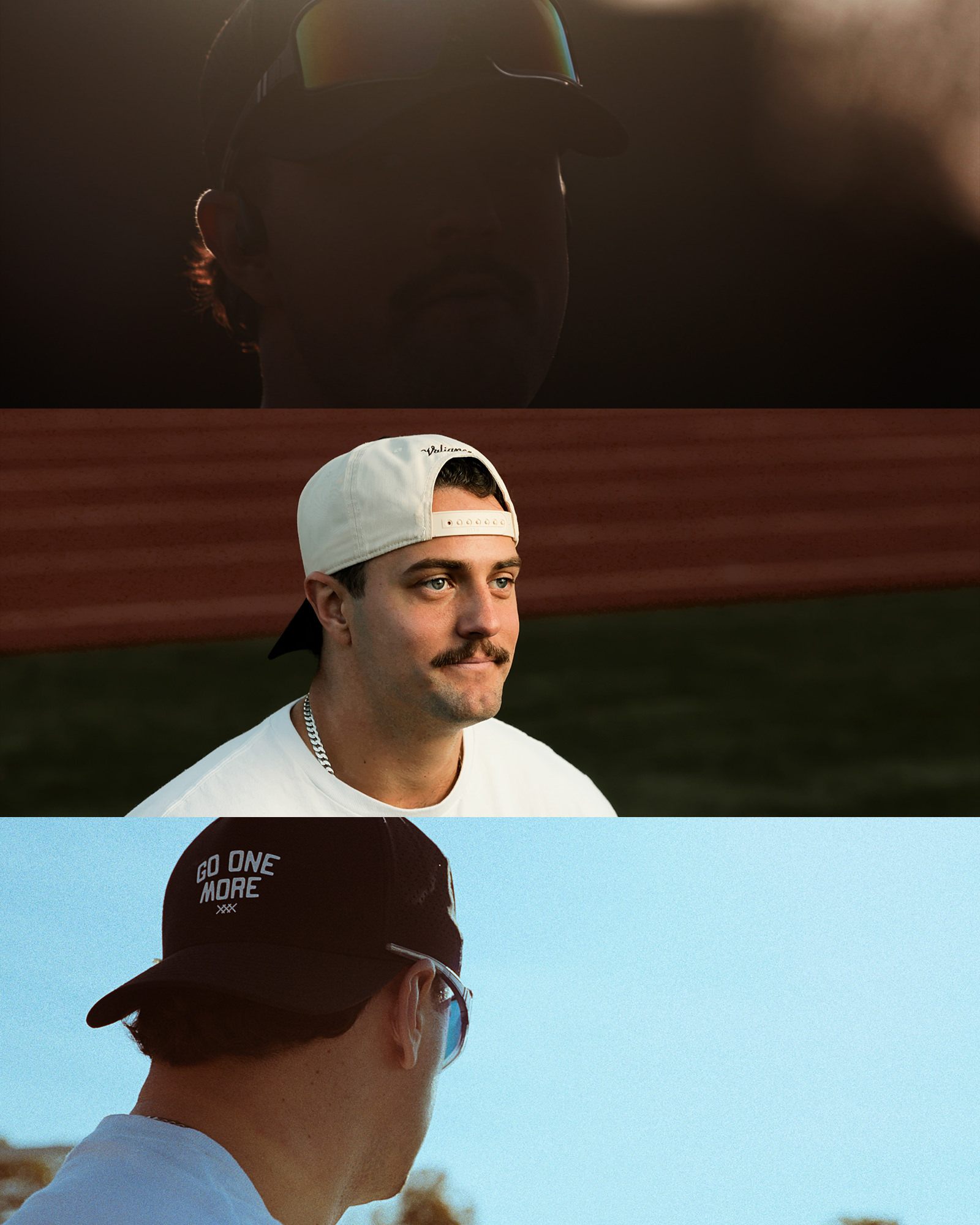
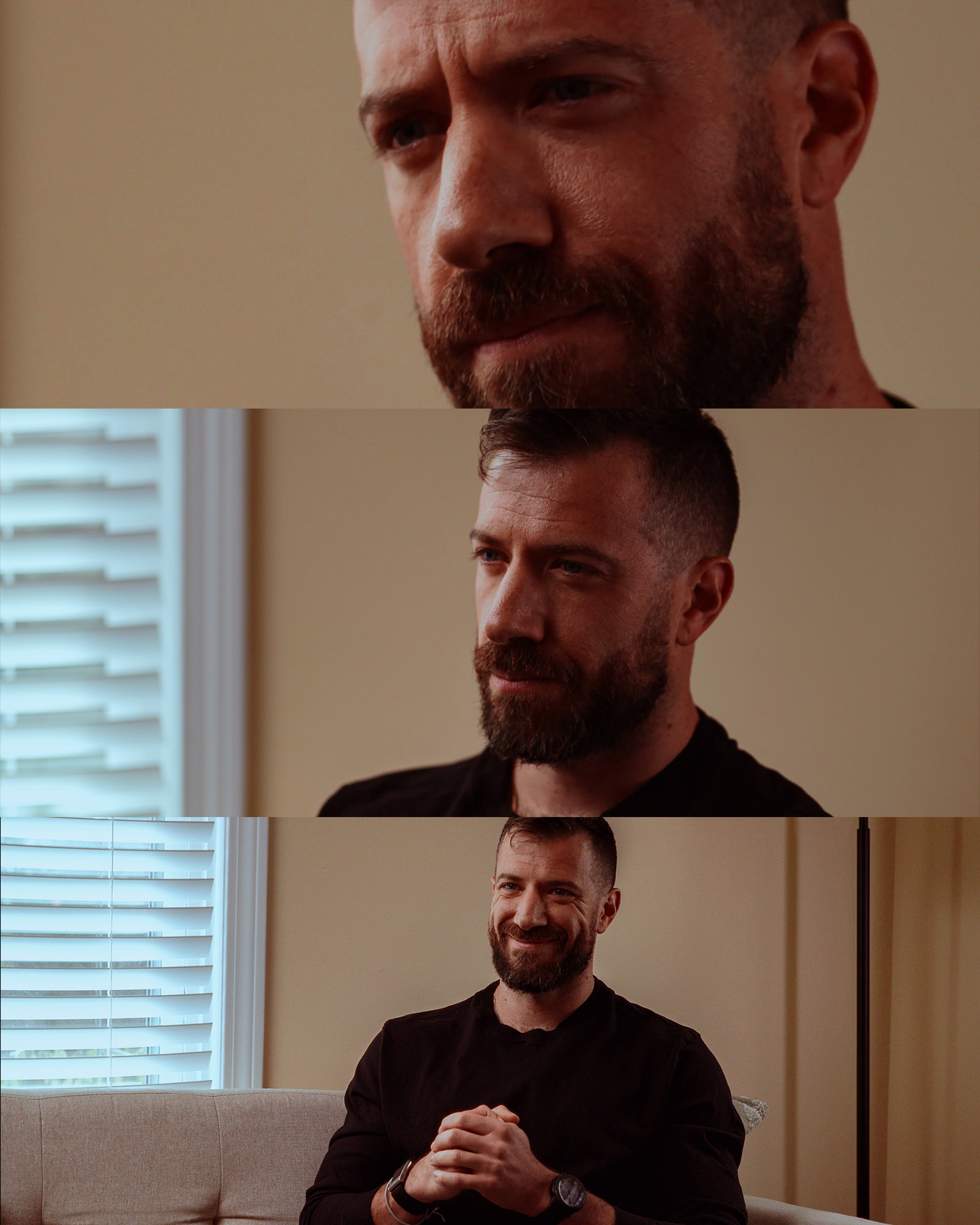
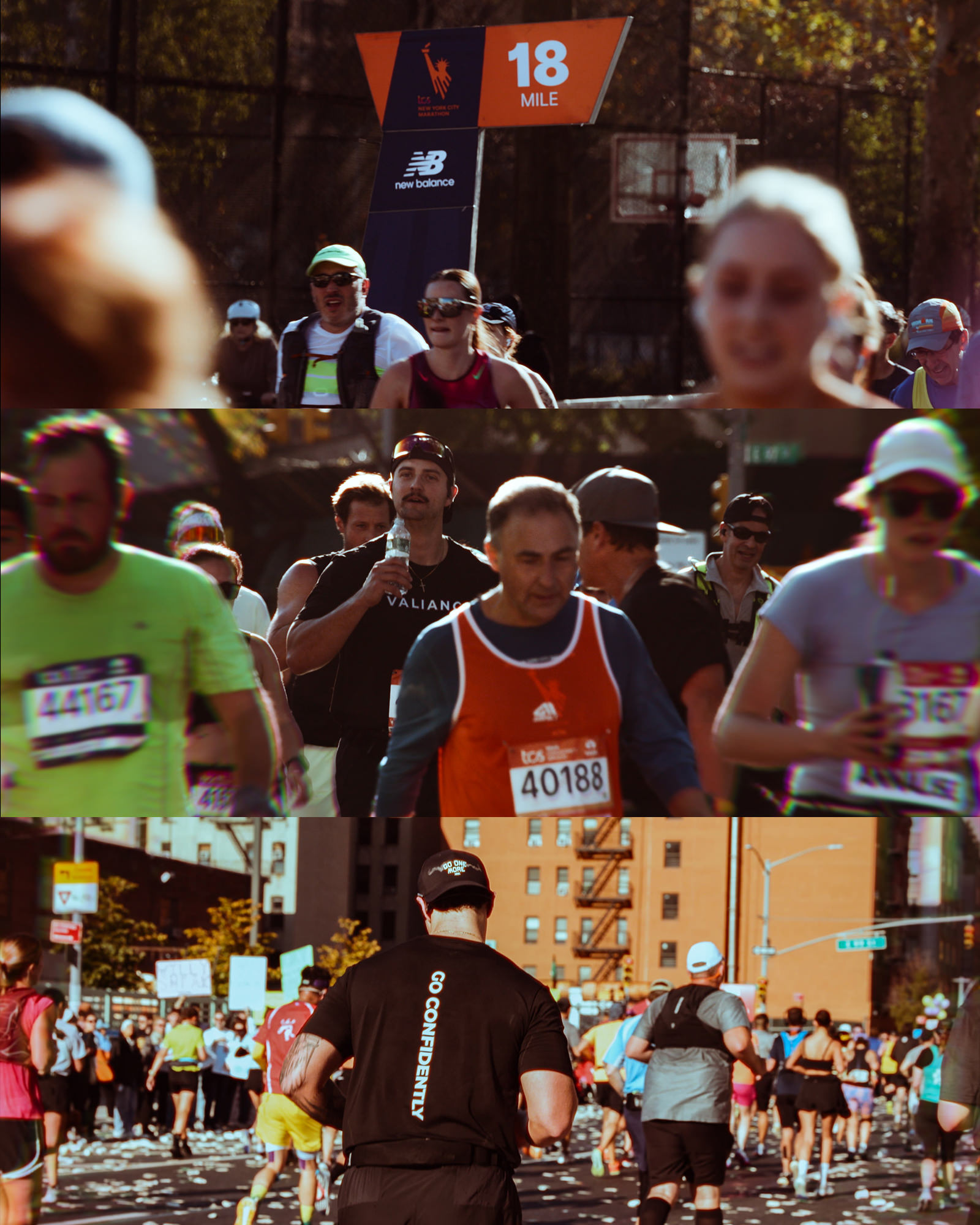
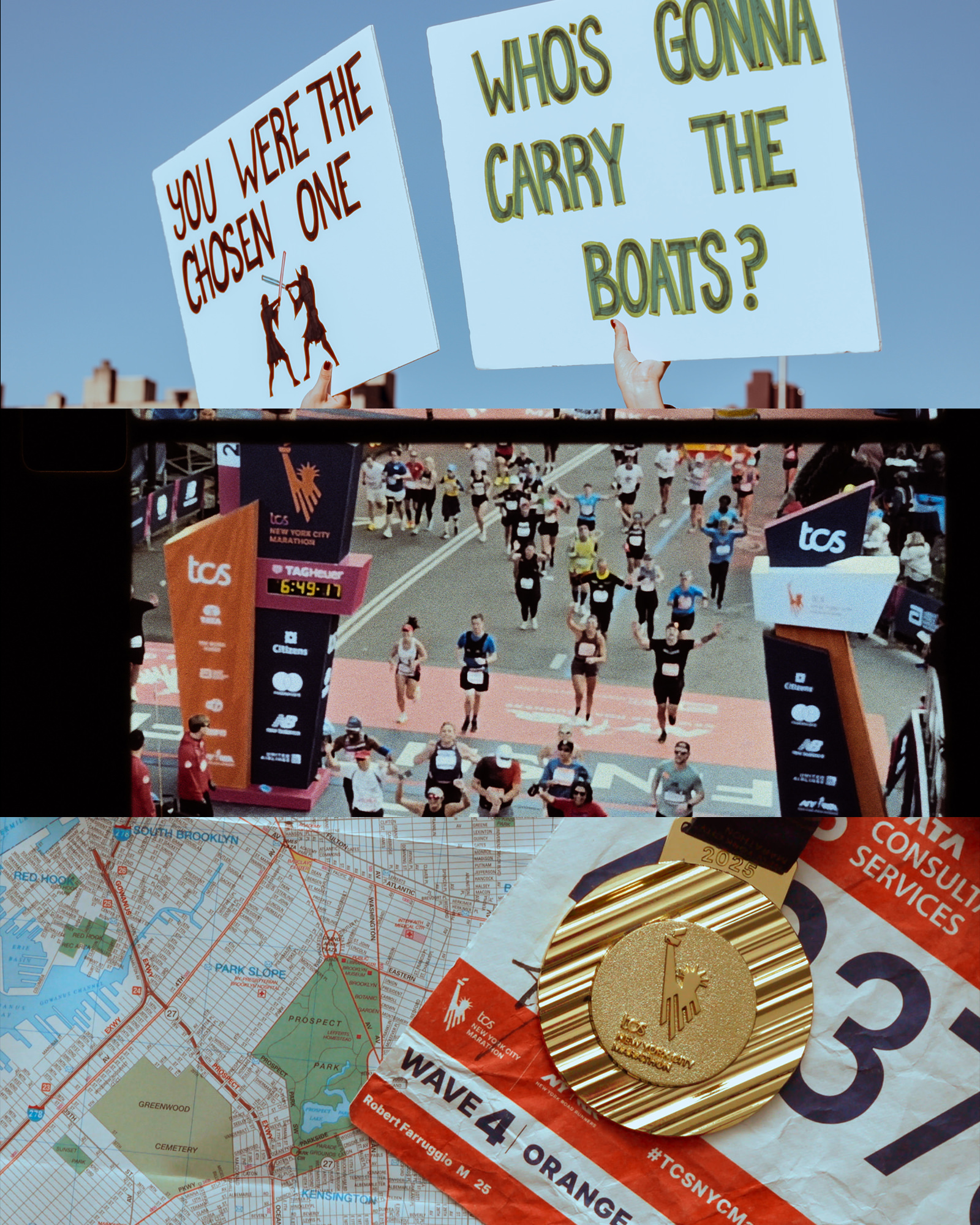
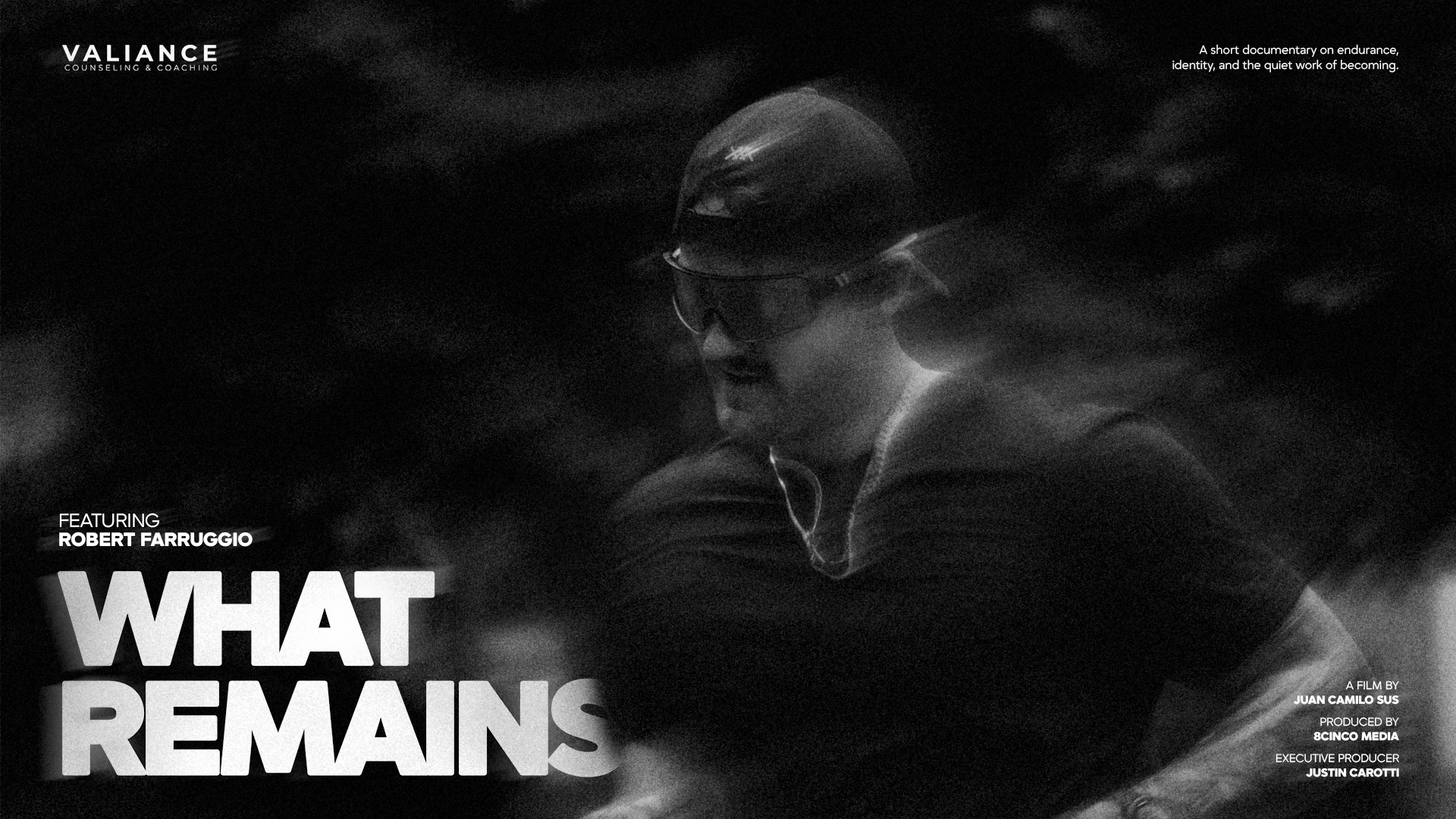
It started with understanding the characters before touching a camera. Rob was the hero, a former athlete stepping voluntarily into adversity. Justin was not the hero. Justin was Yoda. His role was to frame, support, and illuminate, the guide who gives the hero language for what they're already experiencing. The film's architecture came from mapping their relationship onto the hero's journey and finding the center of that Venn diagram: the moment where Rob's physical collapse and Justin's mental performance framework intersected. That intersection became the film's spine.
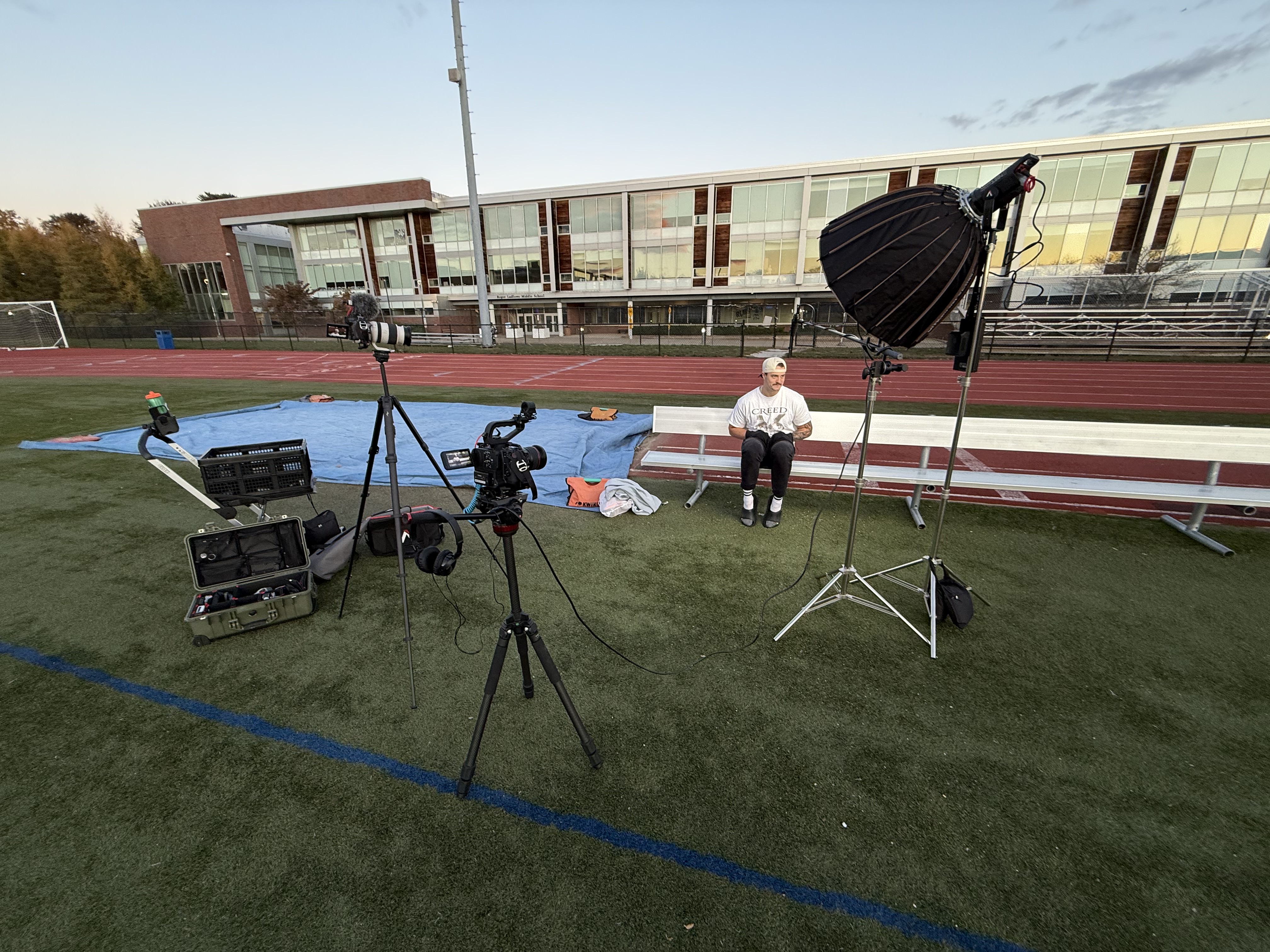
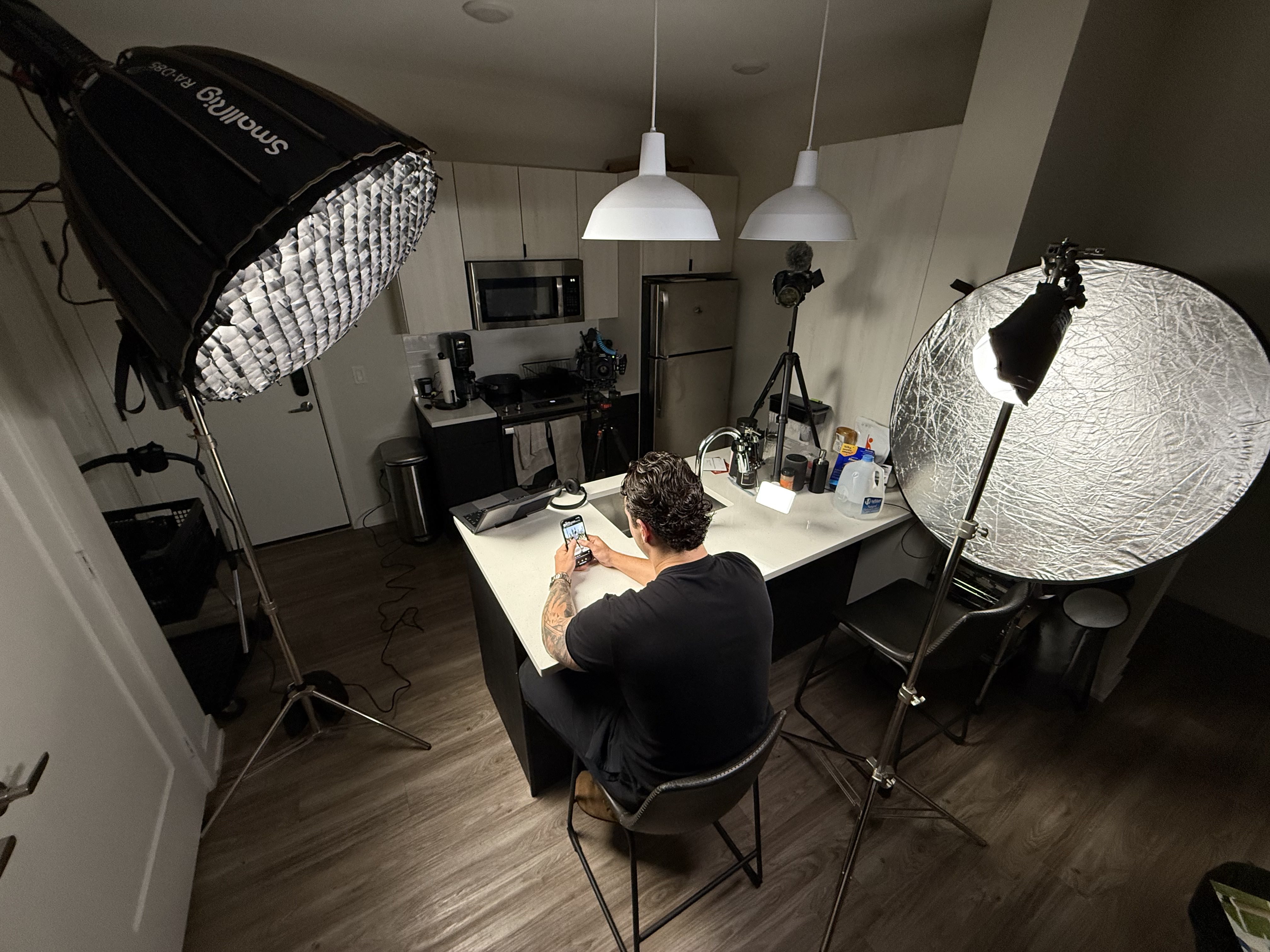
Pre-production began twelve weeks before the marathon on November 2nd. Three interviews with Rob were spread across the training period, capturing his mindset as it evolved in real time. One interview with Justin framed the psychological context. The challenge was that most of the material was recorded before the marathon happened. Nobody knew what race day would look like.
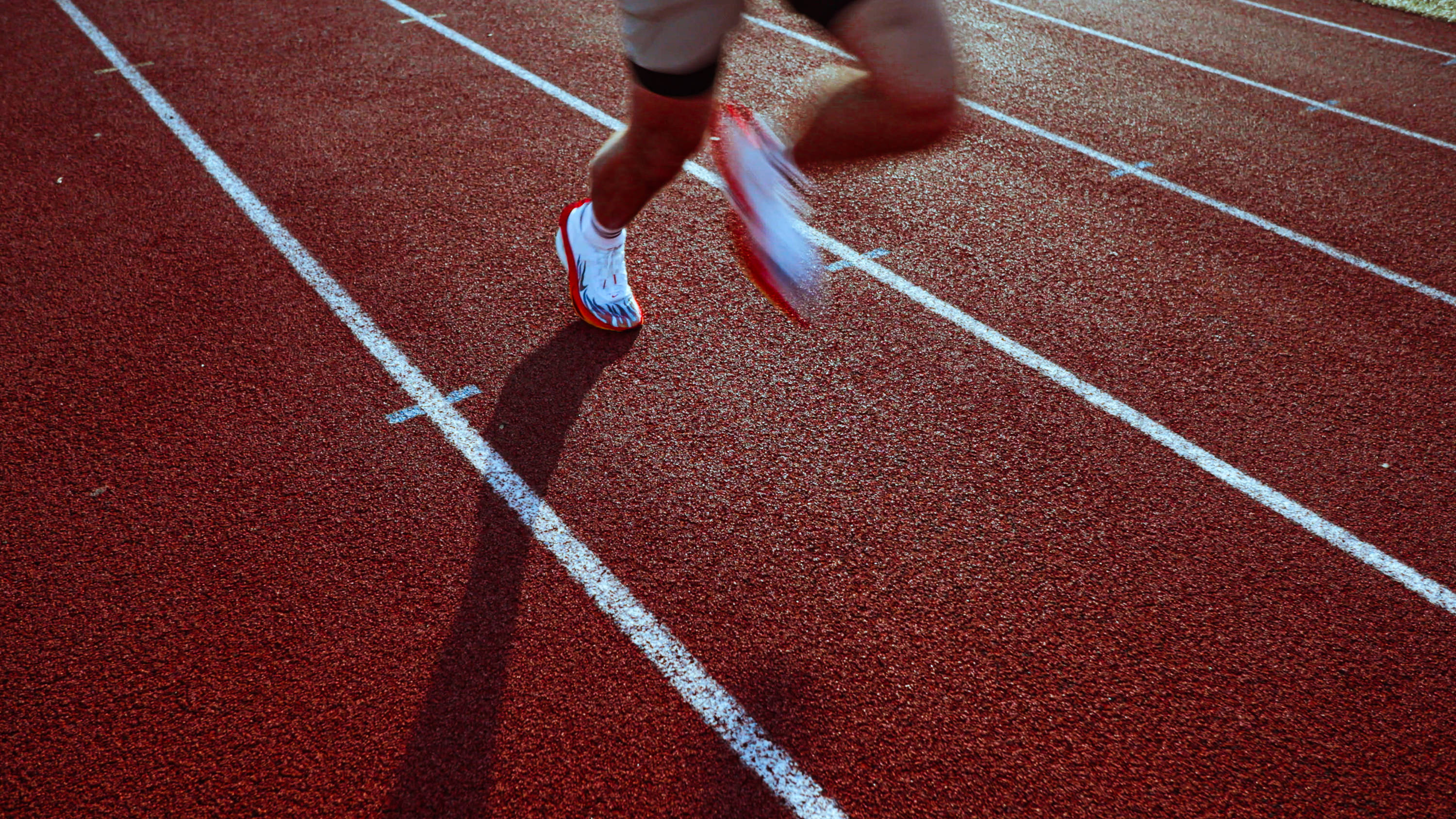
When it did happen, everything changed. Rob's legs seized before mile 20. The sub-4 plan was gone. The debrief interview after the race became the key that unlocked the entire edit, allowing every previous interview and training moment to be recontextualized against what actually happened. Aligning twelve weeks of recorded material to a single day of lived experience was the central editorial challenge of post-production.
Post-production ran through December and January, approximately 100 hours of editing alone out of 200 total hours invested across the project. The film was delivered in February. Three versions were produced: a 40-minute feature documentary, a 7-minute short cut, and a 60-second trailer. The full documentary launched on the Valiance YouTube channel as the first installment of the Valiant Effort series.